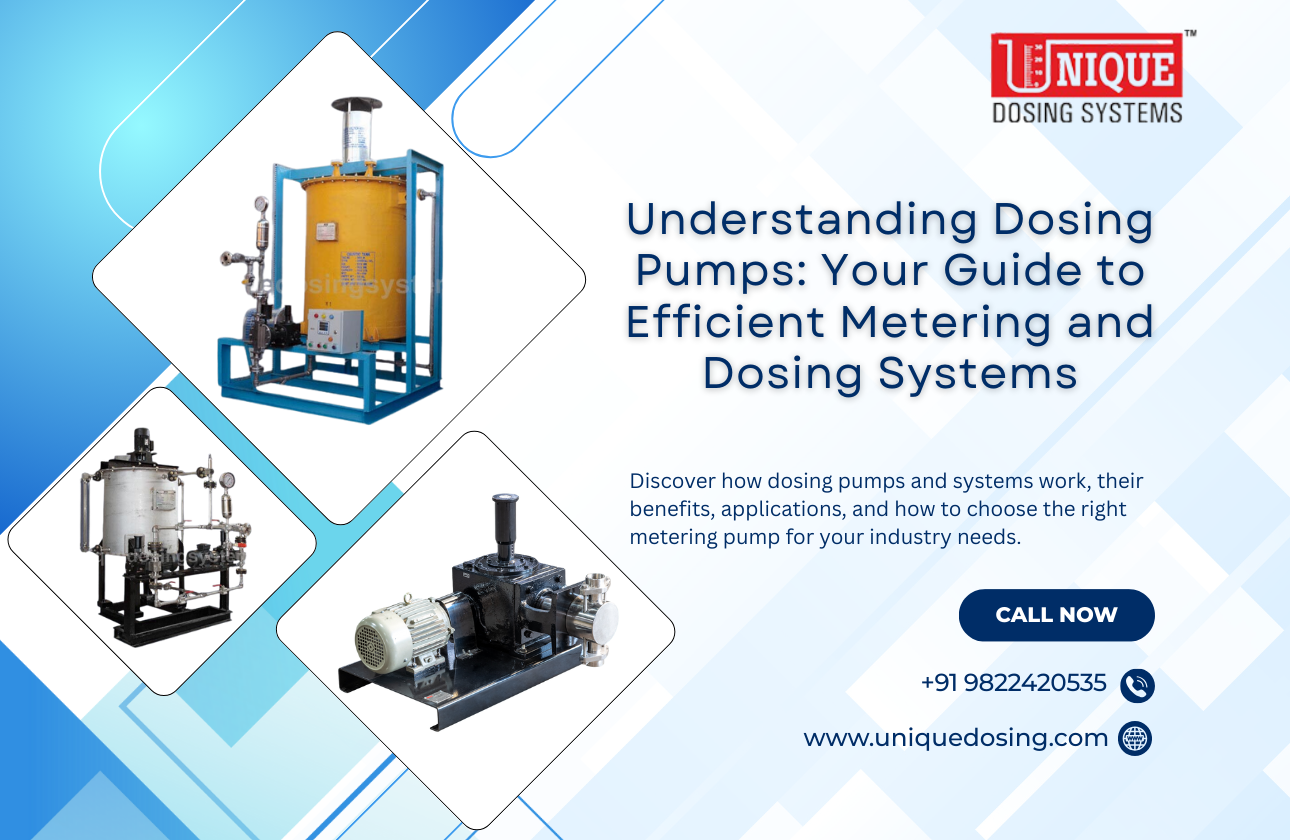
Understanding Dosing Pumps: Your Guide to Efficient Metering and Dosing Systems
Dosing pumps, also referred to as metering pumps, are crucial components in a variety of industrial processes. They are designed to precisely control the flow of liquids, ensuring accurate dosing of chemicals, additives, or other substances into liquid streams. But what makes dosing systems essential, and how can you select the best metering pump for your specific needs?
What Are Dosing Pumps?
A dosing pump is a small, positive displacement pump that is designed to pump a precise flow rate of a chemical or substance into a process or system. These pumps are typically used in applications where small, accurate dosages are critical and are often found in industries such as water treatment, chemical processing, and food production.
Key Features of Dosing Pumps
- Accuracy: Dosing pumps provide precise control over flow rates, which can be crucial in processes where exact dosages are necessary.
- Repeatability: These pumps can consistently deliver the same amount of liquid per cycle, making them reliable in continuous operations.
- Adjustability: Many dosing pumps allow for the adjustment of flow rates, enabling flexibility in different applications.
Types of Dosing Systems
Dosing systems can be standalone setups or integrated into larger systems. They often consist of the pump itself, a driver (like a motor), and various control systems to ensure precise operation. The configurations can vary based on the specific needs of the application, from simple manual setups to sophisticated, automated systems.
Applications of Metering Pumps
Metering pump are used across a wide range of industries. Below are some prominent applications:
- Water and Wastewater Treatment: Ensuring the precise addition of chlorine or other disinfectants.
- Chemical Manufacturing: Accurately dosing hazardous chemicals for reactions and formulations.
- Food and Beverage: Adding flavors, colors, and other additives with precision.
Choosing the Right Dosing Pump
Selecting the right dosing pump depends on various factors including the type of liquid, required flow rate, and the operational environment. Consider the viscosity, temperature, and chemical compatibility of the liquids involved. Also, examine the materials used in pump construction to ensure durability and resistance against potential corrosion.
Why Invest in High-Quality Dosing Systems?
While it might be tempting to opt for cost-effective solutions, investing in a high-quality dosing system brings benefits that far outweigh the initial expense. Enhanced efficiency, reduced waste, and lower maintenance costs are just a few advantages of using superior metering pump.
Conclusion
Dosing pumps play an indispensable role in industrial operations where precision and reliability are non-negotiable. By understanding the distinctions and capabilities of different dosing systems, businesses can ensure efficient and accurate delivery of chemicals, optimizing their processes and conserving resources. When planning to integrate a dosing system, ensure expert consultation to select a solution tailored to your specific application and industry requirements.
Published on January 18, 2026 by Admin